

Insights Article

What is an Outcome?

Everyone uses the word, almost no one defines it the same way

Illustration with people following various paths, one path leads straight to a destination marked by a pin
Jesse White
Chief Executive Officer
Published
May 27, 2026

Walk into any meeting in technology services this year, and someone will say the word “outcome” in the first five minutes. It is on every slide, it ends every sentence, it is in the title of every panel.

Now, ask three people in the room to define it and you will get three different answers. The CIO will define it one way, the CFO another, the head of operations a third. The provider across the table will quietly use whichever definition makes their last engagement look like a win.

Until we are using the same word the same way, the rest of the conversation is theater.
A working definition

Here is a definition, plainly, in one sentence:

An outcome is a measurable business result, attributable to specific work, achieved inside a defined window of time.

The whole thing consists of these four pieces:

    1. A result the business cares about.
    2. A number you can put against it.
    3. Attribution to the work that was done.
    4. A deadline.

If any of the four is missing, you do not have an outcome. You have a hope.

Outcome is not output, and it is not a deliverable

This is where most consulting contracts quietly go off the rails.

An output is something the provider produced. A deliverable is something the provider handed over. An outcome is something that happened to your business.

Watch the difference:

“We deployed Workday.”
That is an output.

“We reduced HR ticket volume by 40% within 90 days of go-live, against the baseline we set in week one.”
That is an outcome.

Or this:

“We delivered an AI strategy roadmap.”
That is a deliverable.

“We removed 20,000 hours of manual triage work from named operations roles by the end of Q2.”
That is an outcome.

Or:

“We migrated to ServiceNow ITSM.”
That is an output.

“We cut average ticket resolution from four days to one day within six months, measured against the baseline taken the week we went live.”
That is an outcome.


You can ship every output and every deliverable in the contract and still produce no outcome. Most engagements do exactly that. The customer is paying for activity and the business is hoping that activity adds up to a result.

How an outcome becomes real

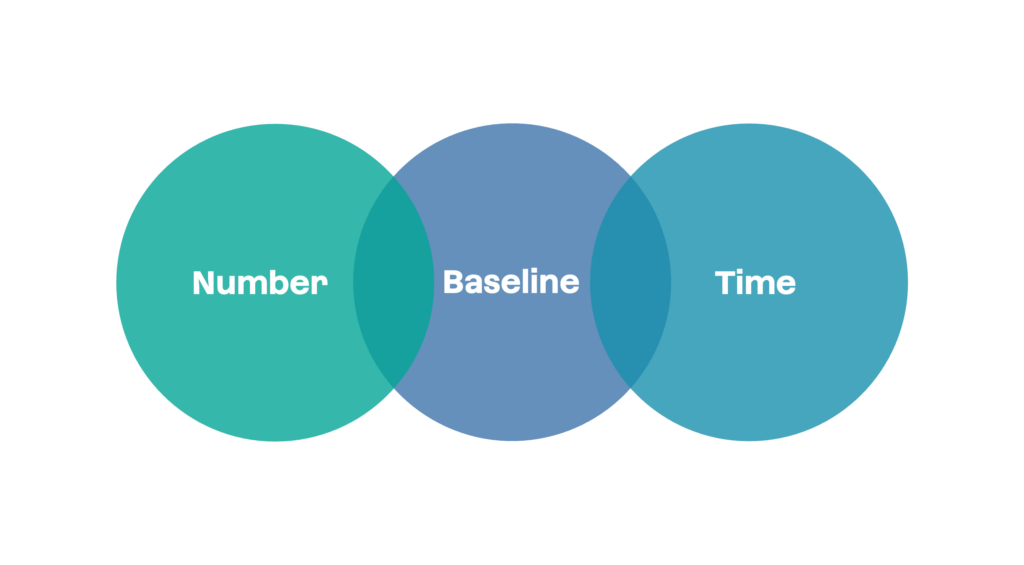
Three circles with Number, baseline, and time as the parts of an outcome.

Reaching an outcome requires three things to make it measurable:

    1. It needs a number. “Improve the service desk” is not an outcome. “Move first-contact resolution from 62% to 80%” is.
    2. It needs a baseline. You cannot improve something without knowing where it started. The baseline is where a partner says, in writing, “this is where you are today.”
    3. It needs a window of time. “Eventually” is not a window. “Within six months of go-live” is.

A common objection here is “we are standing up a brand new capability, so there is no baseline.” Fine. That is not an excuse to skip the number. Take an industry benchmark, pick a credible target, and commit to it.

A new internal support function with no historical NPS is not a reason to leave NPS out of the contract. It is a reason to write down a target like 50 and stand behind it. A real partner does not hide behind missing data; they get the data.

Why this matters to the buyer

This is not a vocabulary lesson. It is a buying lesson.

When a provider is paid for outputs, they ship outputs because that is what their incentive looks like. Every hour billed, every deliverable shipped, every milestone hit, registers as success for them, even if your business has not moved.

When a provider is paid for outcomes, the math changes. Their incentive and yours point in the same direction. Meet the number, get paid. Miss it, do not.

That is the entire reason the word “outcome” matters. Not because “outcome” is a better label than “deliverable.” Because tying the contract to a business result is the only way to make sure the work, the money, and your result are all pointing at the same thing.

An output is something the provider produced. An outcome is something that happened to your business.

A test you can run today

Open your current statement of work. Find the section that describes what you are paying for.

Count the verbs. “Deliver,” “build,” “configure,” “deploy,” “implement,” “stand up,” “design,” “produce.” Those are outputs. They describe motion.

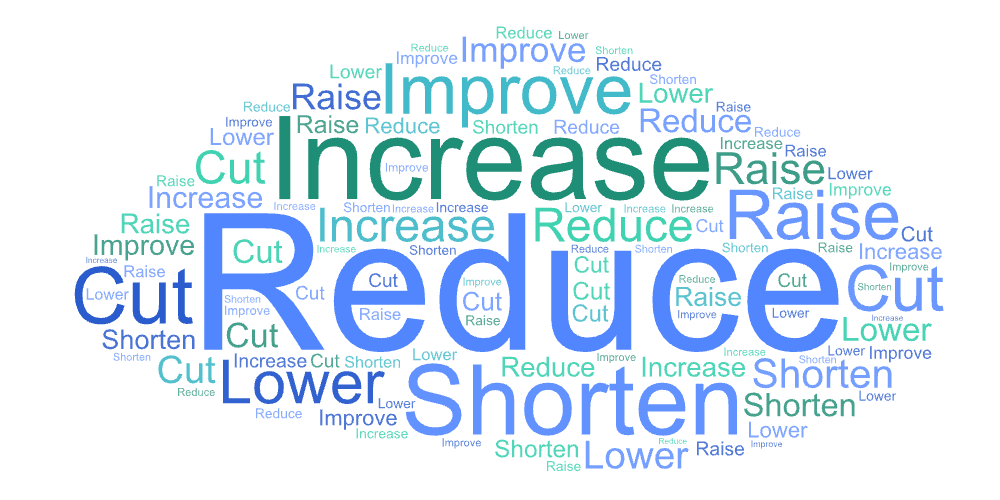
Word cloud graphic with outcome-related words

Now look for the verbs that describe a result. “Reduce,” “increase,” “raise,” “lower,” “cut,” “shorten,” “improve to,” followed by a number, a baseline, and a window. Those describe outcomes.

If the contract is mostly the first list, you bought motion. If it is mostly the second list, you bought a result. Most contracts in this industry are still largely composed of the first list. That is the gap this whole conversation is trying to close.

So next time someone says “outcome”

If three people in your meeting cannot define the same outcome the same way, you have not named one yet. Pick the result. Name the number. Set the window. Then ask the provider whether they will stand behind it.

That is what an outcome is. Everything else is a deliverable wearing a better word.


Frequently asked questions

What is an outcome in technology and consulting services?
An outcome is a measurable business result, attributable to specific work, achieved inside a defined window of time. The four pieces are: a result the business cares about, a number, attribution to the work that produced it, and a deadline.

What is the difference between an outcome and an output?
An output is something the provider produced. An outcome is something that happened to your business. “We deployed Workday” is an output. “We reduced HR ticket volume by 40 percent within 90 days” is an outcome.

What is the difference between an outcome and a deliverable?
A deliverable is something the provider hands over, often a document or artifact like a strategy roadmap. An outcome is the business result that deliverable was supposed to produce. You can ship every deliverable in the contract and still produce no outcome.

How do you measure an outcome when there is no historical baseline?
Take a credible industry benchmark and commit to a target. The absence of a baseline is not a reason to skip the number, it is a reason to set one. A real partner will write the target down and stand behind it.